
 Save to Pinterest
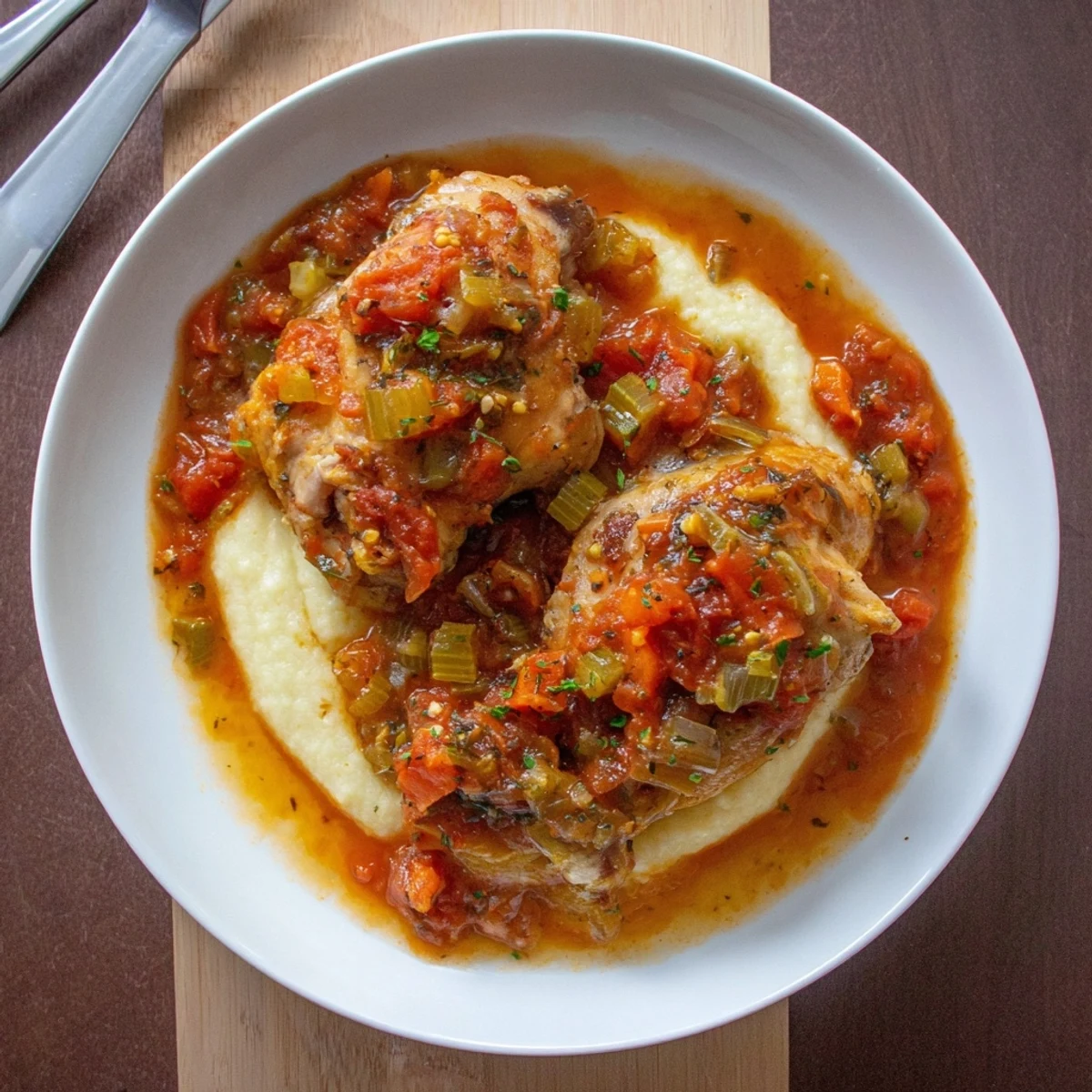
 This osso bucco–style braise starts by searing bone-in chicken thighs, then slowly simmering them with onion, carrot, celery, garlic, tomatoes and dry white wine until tender. The sauce reduces to a savory, slightly glossy finish; finish with lemon zest and chopped parsley for brightness. Hands-on time is ~20 minutes, total cooking about 1h40. Serve over polenta, mashed potatoes or with crusty bread.
The rain was hammering against the kitchen window the evening I decided to braise chicken thighs osso buco style, mostly because I had forgotten to thaw the veal shanks sitting in my freezer like frozen paperweights. What started as a practical workaround turned into one of those dishes that permanently lives in my rotation, the kind where the smell alone pulls people into the kitchen before you even call them to the table.
I served this to my neighbor Marco, a man who grew up outside Milan and has opinions about Italian food that could fill a dissertation. He went quiet after the first bite, which I chose to interpret as the highest possible compliment, and then he asked for the recipe, which confirmed it.
Ingredients
- 8 bone in skinless chicken thighs: Bone in is nonnegotiable here because the bones release collagen into the sauce as it braises, creating body and richness that boneless thighs simply cannot replicate.
- 1 large onion, finely diced: The onion melts into the sauce over the long braise, so do not rush the initial sauté.
- 2 carrots, diced: Cut them fairly small so they integrate into the sauce rather than sitting in it like distinct chunks.
- 2 celery stalks, diced: Celery provides a subtle earthy backbone that balances the acidity of the tomatoes and wine.
- 4 cloves garlic, minced: Fresh garlic only, and add it after the other vegetables have softened to prevent burning.
- 1 can (400g) diced tomatoes: A good quality canned tomato will outperform a mediocre fresh tomato every time in a braise.
- Zest of 1 lemon: Stirred in at the very end, the zest wakes up the entire dish with brightness without turning it sour.
- 1/4 cup chopped flat leaf parsley: Added alongside the lemon zest at the finish for a hit of fresh green flavor.
- 1 cup dry white wine: Something you would drink, not cooking wine, and dry is key because sweetness will throw off the sauce.
- 1 1/2 cups chicken stock: Low sodium lets you control the salt level throughout the cooking process.
- 1/4 cup all purpose flour (or gluten free alternative): Used for dredging the chicken to create a golden crust and lightly thicken the braise.
- 2 tbsp olive oil: A good quality oil makes a noticeable difference since it forms the flavor base.
- 1 tsp salt and 1/2 tsp black pepper: Season the chicken generously before dredging and adjust the sauce at the end.
- 1/2 tsp dried thyme and 1 bay leaf: These two dried aromatics work quietly in the background to give the sauce depth without overpowering it.
Instructions
- Season and dredge the chicken:
- Pat every thigh thoroughly dry with paper towels, then season well with salt and pepper before dredging each one lightly in flour and shaking off the excess so only a thin coating remains.
- Build a golden crust:
- Heat olive oil in a heavy Dutch oven over medium high heat until it shimmers, then brown the chicken thighs in batches, about 4 minutes per side, until deeply golden, removing them to a plate as they finish.
- Soften the aromatics:
- In the same pot with all those beautiful fond bits stuck to the bottom, sauté the onion, carrots, and celery for 5 to 6 minutes until they soften and just begin to caramelize, then stir in the garlic for one minute more.
- Deglaze with wine:
- Pour in the white wine and use a wooden spoon to scrape up every last bit of browned goodness from the bottom of the pot, letting the wine bubble and reduce for 2 to 3 minutes until the sharp alcohol smell fades.
- Build the braise:
- Add the diced tomatoes, chicken stock, thyme, and bay leaf, then nestle the browned chicken thighs back into the pot with any accumulated juices and bring everything to a gentle simmer.
- Braise low and slow:
- Cover the pot, reduce the heat to low, and let it cook for 1 hour, stirring occasionally, until the chicken is tender enough to cut with a spoon and the sauce has deepened in color.
- Finish and brighten:
- Remove the lid for the last 15 minutes if the sauce needs thickening, then stir in the lemon zest and parsley just before serving and taste for salt and pepper.
 Save to Pinterest
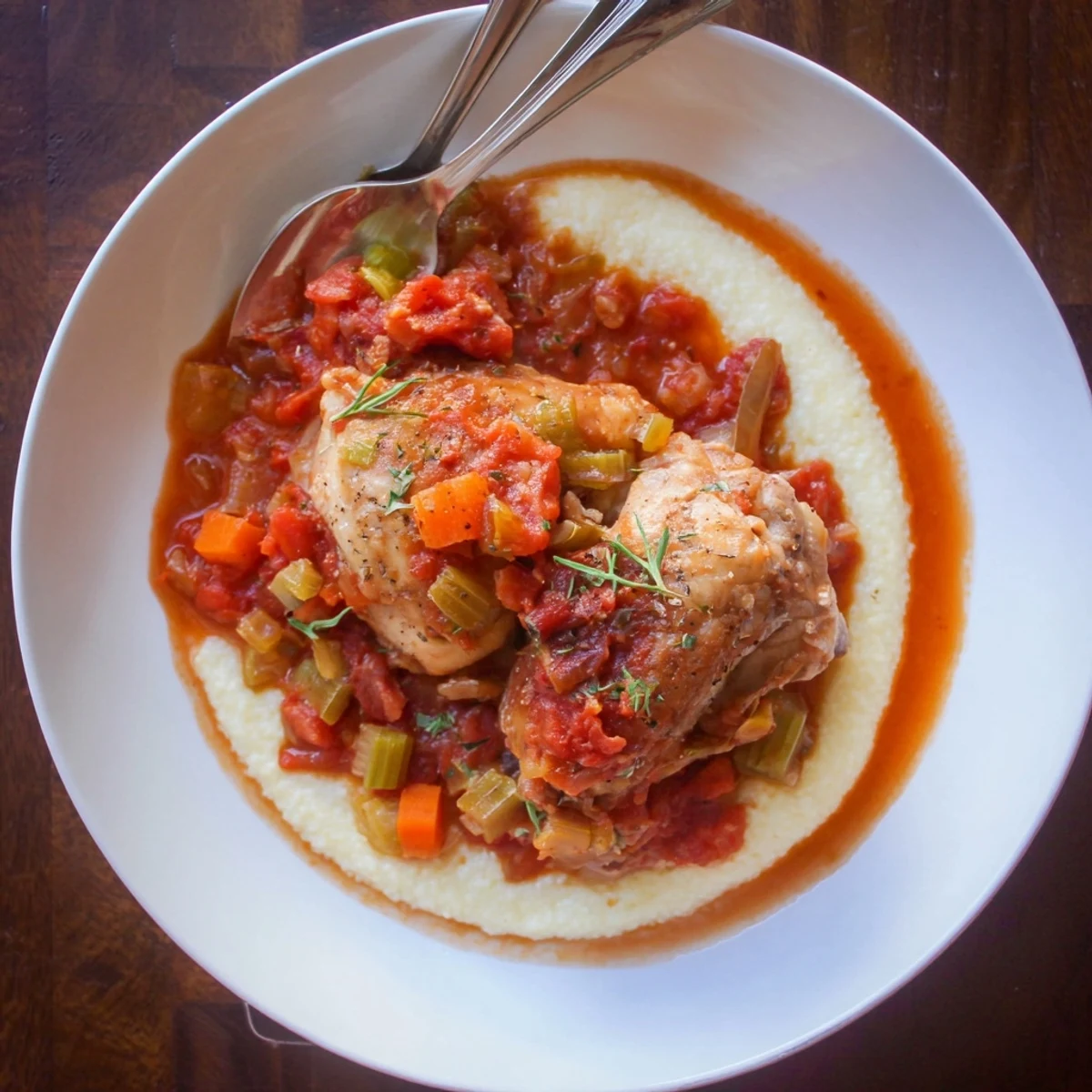
 There is something about lifting the lid of a Dutch oven after an hour that feels like opening a gift, the steam rising with that concentrated aroma of wine and tomato and slowly cooked meat.
What to Serve Alongside
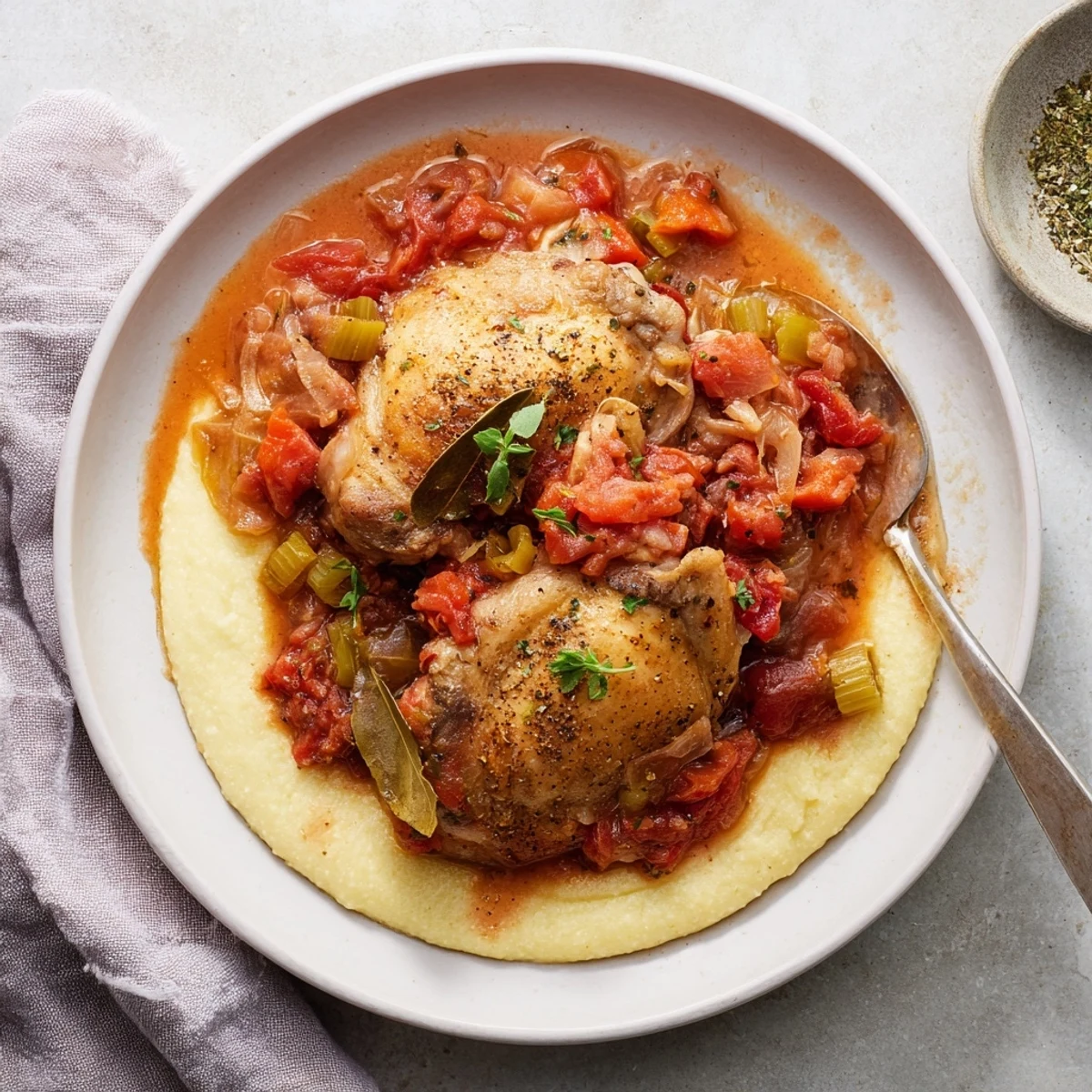
Creamy polenta is my first choice because it acts like a edible plate for the sauce, soaking up every bit of it without competing with the chicken. Mashed potatoes work beautifully too, and a thick slice of crusty bread is honestly all you need if you want to keep things simple and let the braise be the star.
Flavor Twists Worth Trying
A splash of balsamic vinegar stirred in during the last few minutes adds a gentle tang that rounds out the tomato acidity in a way that surprised me the first time I tried it. I have also been known to tuck a few anchovy fillets into the sauce at the start, which dissolve completely and add an umami depth that nobody can ever identify but everyone notices.
Storage and Leftover Wisdom
This dish is arguably better the next day when the flavors have had time to settle and marry in the refrigerator overnight, making it an ideal candidate for cooking ahead when you have people coming over.
- Store leftovers in an airtight container in the refrigerator for up to three days.
- Reheat gently on the stovetop over low heat rather than the microwave to keep the chicken tender.
- Always remove the bay leaf before storing because leaving it in will continue to infuse and eventually overpower the sauce.
 Save to Pinterest
 Some recipes become favorites because they impress, but this one earned its place because it fills the house with warmth and asks so little in return.
Recipe FAQs
- → Can I use boneless chicken thighs instead of bone-in?
-
You can use boneless thighs, but bone-in pieces add extra flavor and body to the sauce. If using boneless, reduce braising time slightly and watch for doneness to avoid overcooking.
- → How do I thicken the sauce if it’s too thin?
-
Remove the lid for the last 10–15 minutes to reduce the liquid. You can also whisk a little flour or cornstarch with cold stock and stir it in, or mash some of the cooked vegetables into the sauce to naturally thicken it.
- → What wine should I choose for braising?
-
A dry white like Pinot Grigio or an unoaked Chardonnay works well; they add acidity without overpowering the tomatoes. For a deeper flavor, a light Chianti can also be used sparingly.
- → Any tips for extra depth of flavor?
-
Add a splash of balsamic vinegar or a couple of anchovy fillets while sautéing the vegetables; both deepen the savory profile without making the dish taste fishy.
- → Is this suitable for a gluten-free diet?
-
Yes—use a gluten-free flour or omit the flour dredge and brown the thighs directly. Check labels on stock and canned tomatoes for hidden gluten-containing ingredients.
- → How should leftovers be stored and reheated?
-
Cool to room temperature, refrigerate in an airtight container for up to 3 days, or freeze up to 2 months. Reheat gently on the stovetop over low heat to preserve texture and avoid drying the chicken.