
 Save to Pinterest
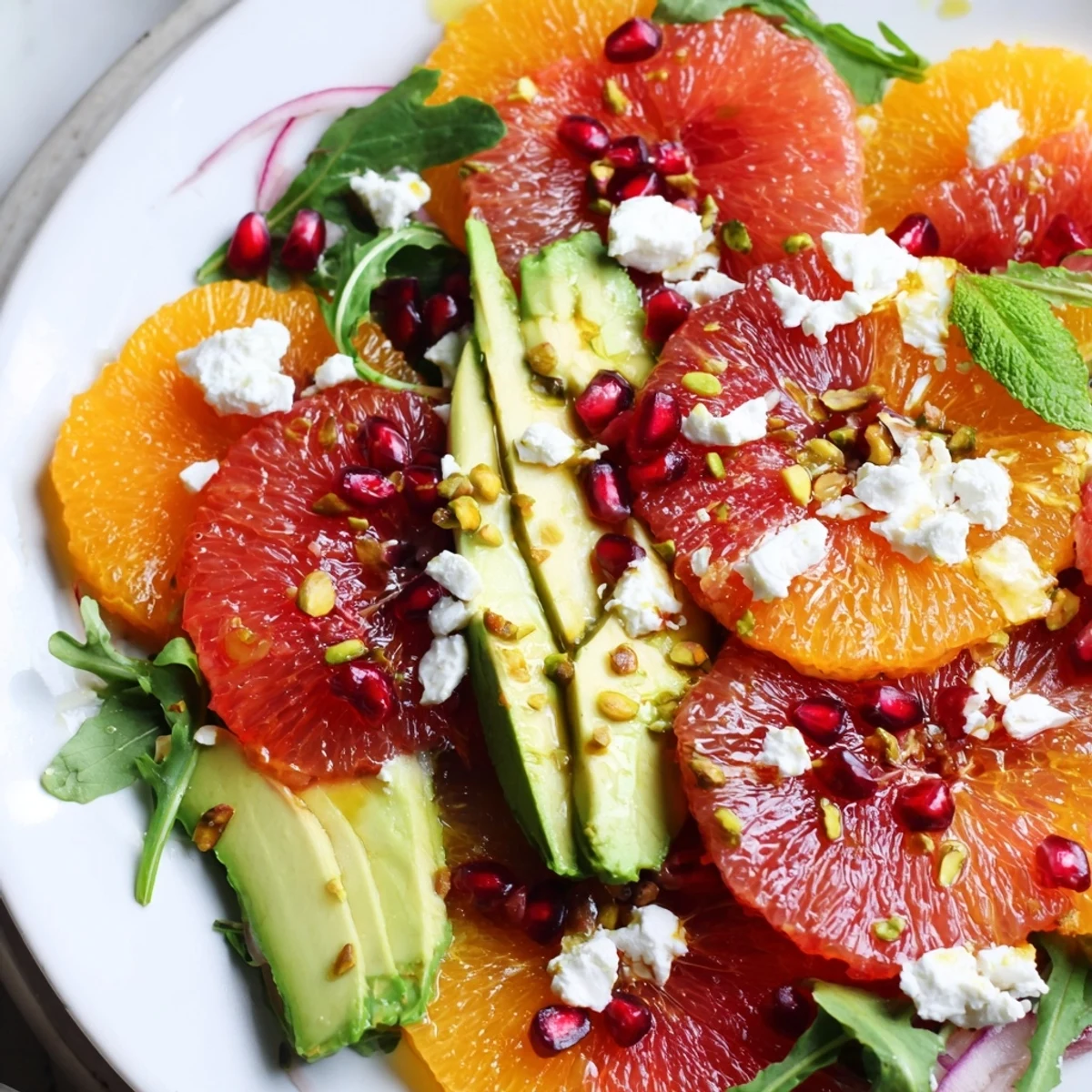
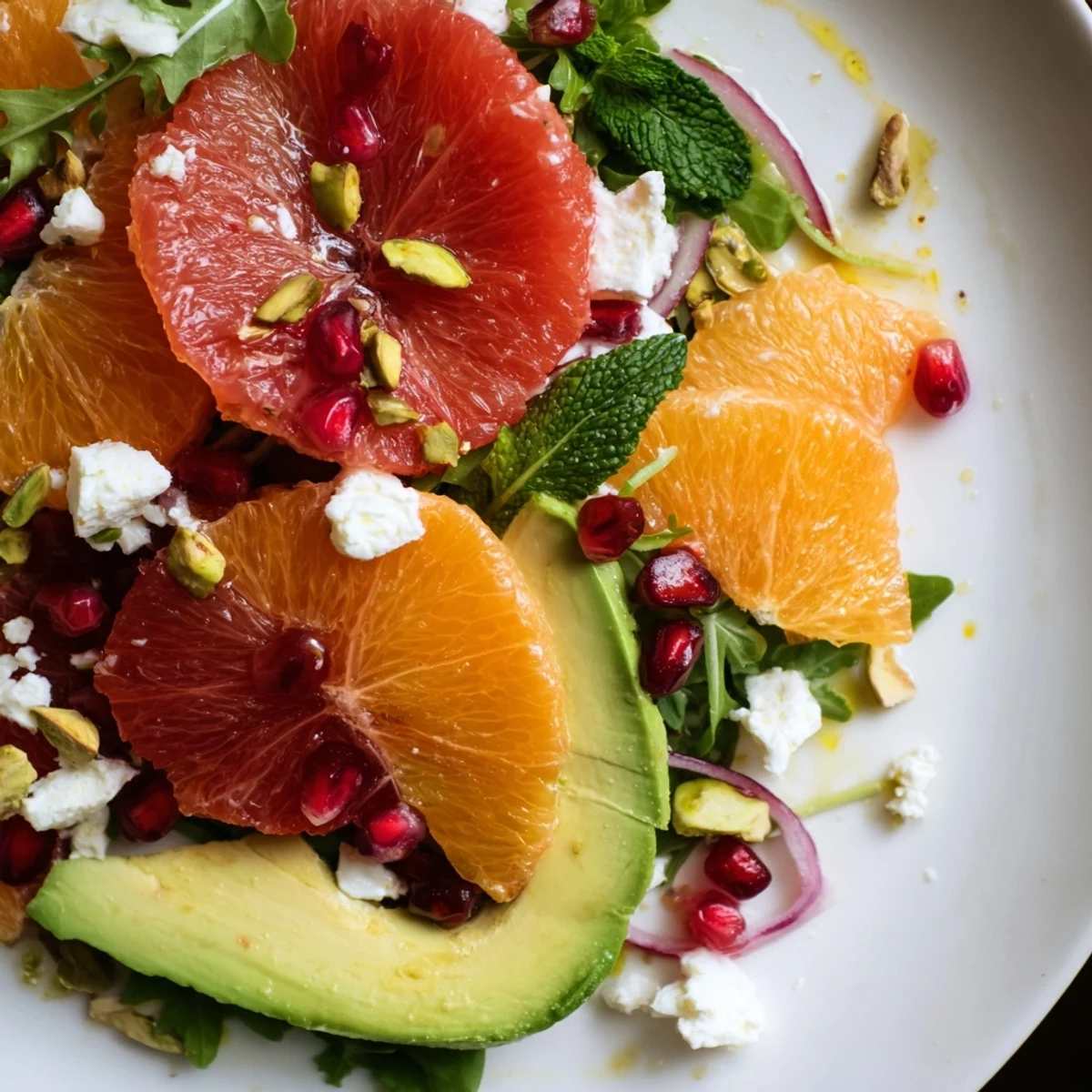
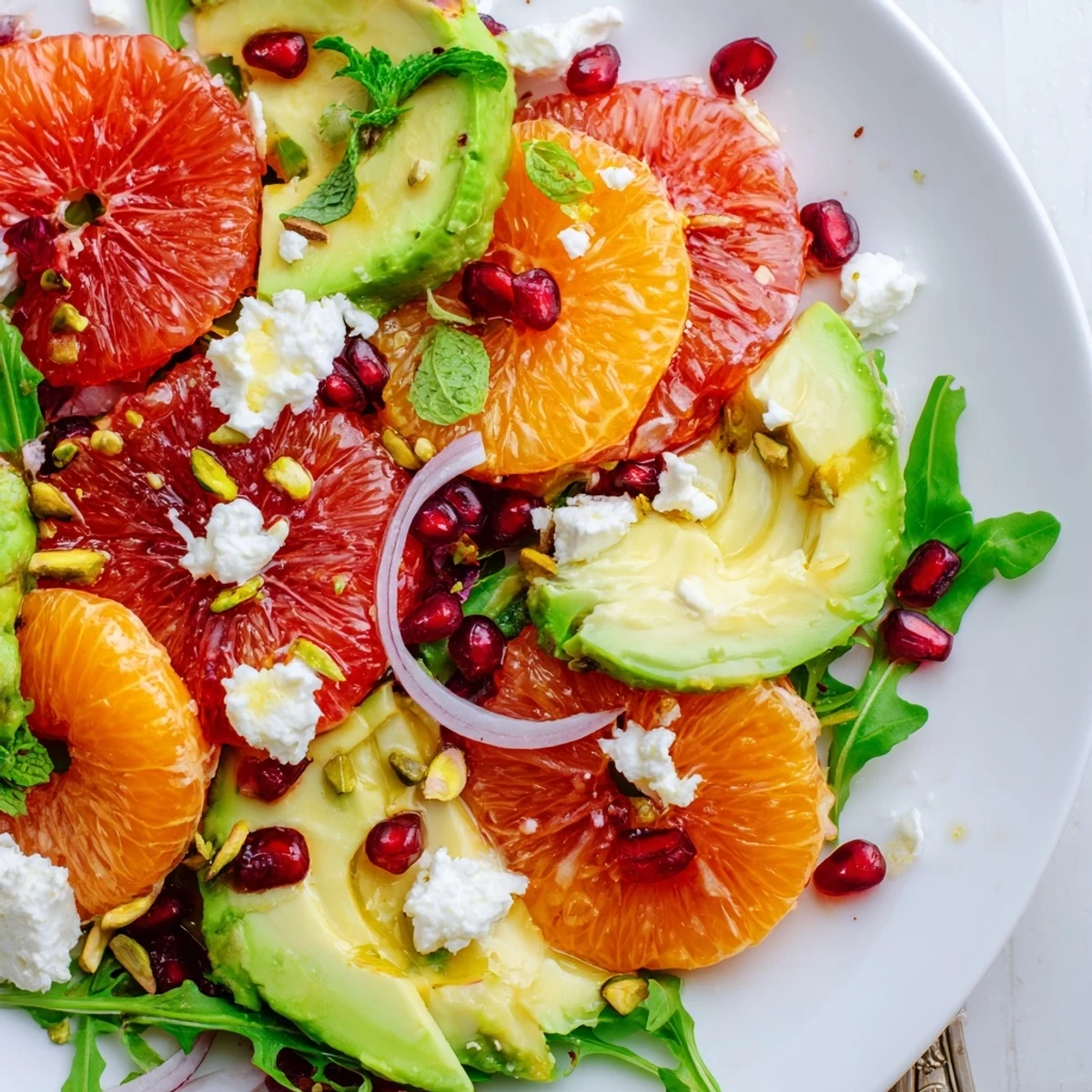
 This vibrant citrus salad brings together the best of Mediterranean flavors in just 20 minutes. Juicy orange and grapefruit segments are layered over a bed of fresh greens with creamy avocado slices, sweet pomegranate seeds, and tangy crumbled feta.
A simple homemade dressing of extra-virgin olive oil, lemon juice, honey, and Dijon mustard ties everything together beautifully. Garnish with torn fresh mint and toasted pistachios for an elegant finish.
Perfect as a starter, side dish, or a light lunch, this gluten-free vegetarian dish is as nutritious as it is visually stunning.
Winter had dragged on for weeks when my neighbor dropped off a bag of grapefruits from her tree. I stared at them on the counter, wondering what to do, until that morning light hit the kitchen just right and I thought—something bright, something that tastes like sunshine even when it's freezing outside.
I first made this for a book club meeting when I realized I had completely forgotten to prepare anything substantial. The citrus was already sitting there, the avocado was ripe, and honestly, I threw it together in a mild panic. They all asked for the recipe, and I had to admit there was nothing to write down—it was just things that happened to be in my kitchen.
Ingredients
- Citrus fruits: Oranges and grapefruits form the backbone, but if you can find blood oranges, grab them—they turn everything into this stunning ruby red that makes people pause before eating
- Ripe avocado: You want it to yield to gentle pressure but not feel mushy, and slice it right before serving so it does not have time to brown
- Red onion: Thin slices provide just enough sharpness to cut through all that sweetness
- Pomegranate seeds: These are not just garnish, they are little explosions of juice that brighten every other bite
- Crumbled feta: The salty creaminess ties everything together, but use vegan feta if you need it dairy free
- Mixed greens: Arugula adds a nice peppery bite, but baby spinach works if you prefer something milder
- Olive oil: Extra virgin matters here because you will really taste it
- Fresh lemon juice: Adds brightness that enhances the citrus without overpowering it
- Honey or maple syrup: Just enough to balance the acid in the dressing
- Dijon mustard: The secret ingredient that makes the dressing cling to everything instead of pooling at the bottom
Instructions
- Prep the citrus:
- Cut off the top and bottom of each fruit, then slice away the peel and white pith following the curve. Hold the fruit over a bowl to catch juices and cut between the membranes to release perfect segments.
- Slice the avocado:
- Halve it, remove the pit with a careful thwack of your knife, and use a spoon to scoop out the flesh. Slice it thinly right before assembling so it stays vibrant green.
- Thinly slice the red onion:
- A sharp knife makes all the difference here—you want paper thin rounds, not chunks that overwhelm delicate bites.
- Whisk the dressing:
- Combine olive oil, lemon juice, honey, mustard, salt, and pepper in a small bowl. Whisk until it emulsifies into something silky and taste it to adjust the seasoning.
- Build the base:
- Spread your greens across a large platter or shallow bowl. Do not mound them too high or all the good toppings will slide off.
- Arrange the toppings:
- Scatter citrus segments and avocado slices across the greens, then tuck in the red onion. Think of it as painting—some color here, some creaminess there.
- Add the jewels:
- Sprinkle pomegranate seeds and crumbled feta over everything. Let some fall naturally into the crevices rather than placing each one deliberately.
- Dress and finish:
- Drizzle the dressing evenly, then add torn mint or toasted nuts if you are using them. Serve immediately while everything is crisp and bright.
 Save to Pinterest
 My mom makes this every Christmas Eve now, setting it out as people arrive. Watching everyone reach for the same bright, beautiful dish while catching up and laughing—that is what food is supposed to do.
Choosing the Best Citrus
I have learned to pick fruits that feel heavy for their size, which means they are full of juice. Store them at room temperature for a few days if they need to ripen, but once they are cut, keep the leftovers cold and eat them within two days.
Make Ahead Strategy
You can segment the citrus and whisk the dressing up to a day ahead, storing them separately in the fridge. The avocado, though, that has to happen last minute or it will turn brown and sad on your beautiful salad.
Serving Suggestions
This holds its own as a light lunch or makes a stunning starter. It pairs beautifully with grilled fish or roasted chicken if you want something more substantial.
- A crisp white wine like Sauvignon Blanc brings out the citrus notes
- Sparkling water with a twist of lime keeps it refreshing and light
- Crusty bread on the side helps soak up any extra dressing
 Save to Pinterest
 There is something about eating something this vibrant that makes winter feel a little less endless. Hope it brings some brightness to your table too.
Recipe FAQs
- → Can I prepare this citrus salad ahead of time?
-
You can prep the individual components up to a day in advance. Segment the citrus, slice the onion, and make the dressing separately, storing each in airtight containers in the fridge. Assemble everything just before serving to keep the greens fresh and the avocado from browning.
- → What is the best way to segment citrus fruits for this salad?
-
Use a sharp knife to slice off the top and bottom of each fruit, then cut away the peel and white pith following the curve of the fruit. Cut between the membranes to release clean segments, or simply slice the peeled fruit into rounds for a more rustic presentation.
- → How do I keep the avocado from turning brown?
-
Slice the avocado right before assembling the salad. You can also toss the slices with a small splash of lemon juice, which helps slow oxidation. The lemon juice already in the dressing provides some protection once the salad is plated.
- → What can I substitute for feta cheese?
-
Goat cheese crumbles work beautifully as a substitute, offering a similar tangy creaminess. For a dairy-free version, try a plant-based feta alternative or simply omit the cheese and add a sprinkle of nutritional yeast for a savory depth.
- → Which citrus fruits work best in this salad?
-
Naval oranges and ruby red grapefruits are classic choices that provide a lovely balance of sweet and tart. Blood oranges add a gorgeous crimson color. You can also include tangerines, pomelo, or Cara Cara oranges for variety in both flavor and visual appeal.
- → What main dishes pair well with this citrus salad?
-
Grilled lemon herb chicken, seared shrimp, or baked salmon complement the bright flavors perfectly. For a vegetarian pairing, try serving it alongside a hearty grain bowl or warm couscous with roasted vegetables.