
 Save to Pinterest
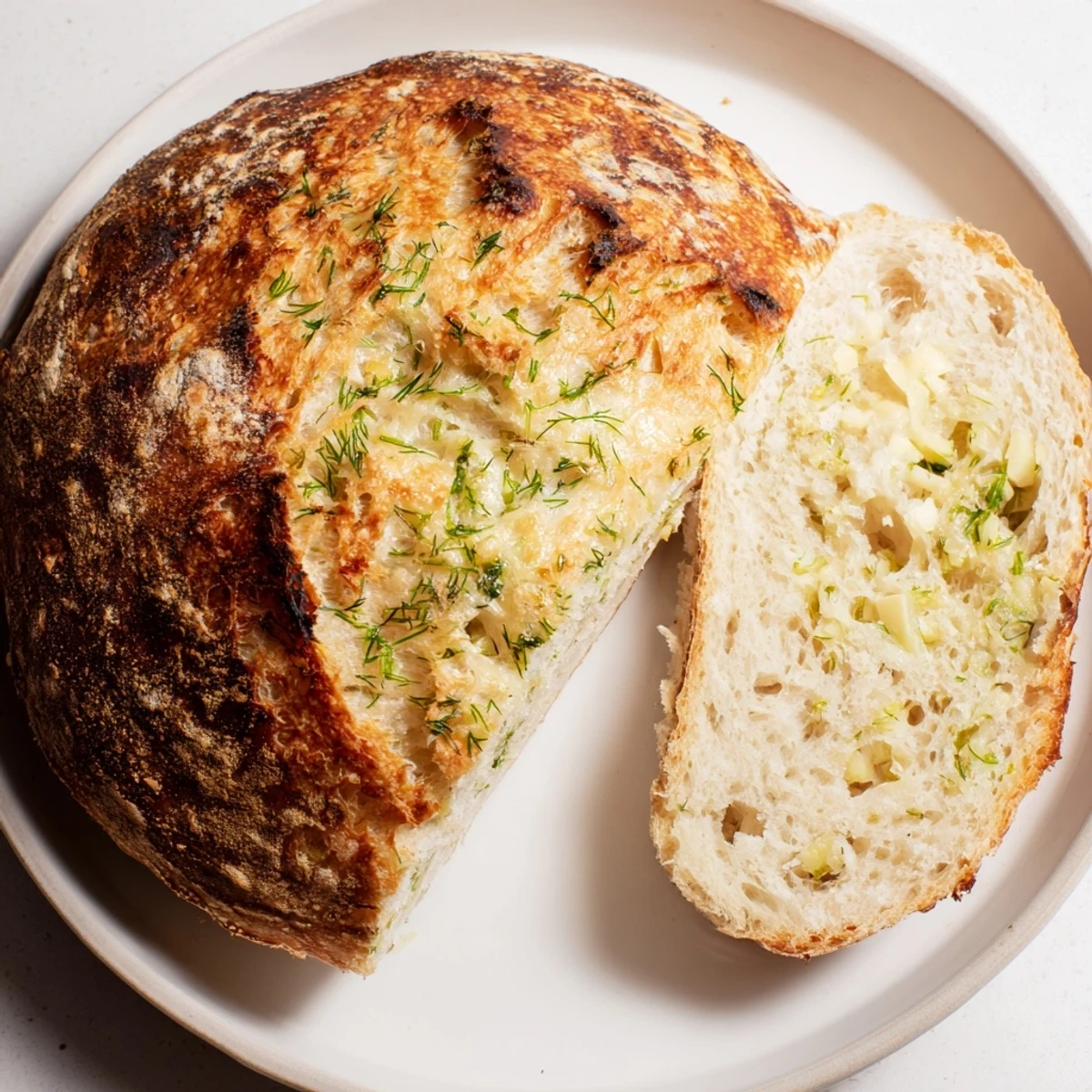
 This artisan loaf combines the fresh aroma of dill with the richness of Gouda cheese in a crusty bread crafted without kneading. After simple mixing, the dough rests overnight to develop flavor and texture. Baking in a hot Dutch oven creates a crisp crust and tender crumb perfect for sandwiches or alongside meals. Variations include substituting cheeses or adding yogurt for tanginess. An effortless option for homemade bread lovers seeking rustic charm and bold flavors.
The first time I made no-knead bread, I kept checking the bowl every few hours, convinced something so simple couldn possibly work. By morning, I had this bubbly, alive dough staring back at me. Now this dill and Gouda version is the one that makes my whole kitchen smell like an artisan bakery. The way the cheese melts into pockets throughout the crumb still feels like magic every single time.
I served this alongside a simple tomato soup last winter, and my friend actually stopped talking mid sentence after her first bite. The crunch of that crust, followed by the soft interior with those melty cheese pockets, it changes how people think about homemade bread entirely. Now whenever I invite people over, someone inevitably asks if Ill be making that cheese bread again.
Ingredients
- Bread flour: The higher protein content gives you that beautifully chewy texture and impressive oven spring
- Salt: Do not reduce this amount it balances the rich cheese and brings out the dills brightness
- Instant yeast: No proofing needed, it quietly does its work during that long rest period
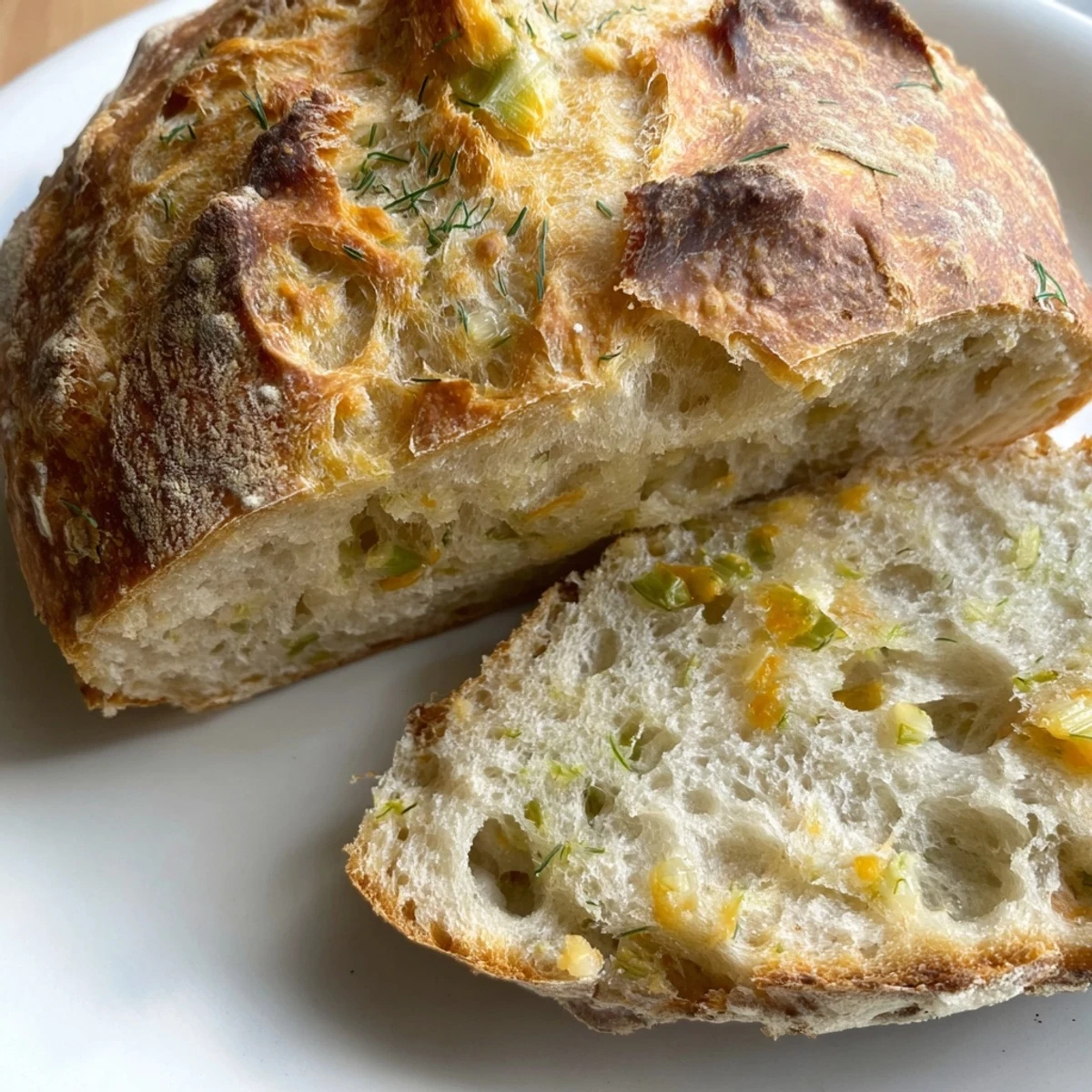
- Gouda cheese: Dice it into small cubes rather than grating so you get distinct melty pockets throughout
- Fresh dill: Chop it finely so it distributes evenly, though dried works in a pinch at half the amount
- Lukewarm water: Think bath temperature, too hot kills the yeast, too cold slows everything down
Instructions
- Mix your dry foundation:
- Whisk the flour, salt, and yeast in a large bowl until completely combined
- Add the flavor makers:
- Stir in the diced Gouda and chopped dill until they are evenly distributed throughout the flour mixture
- Bring it together:
- Pour in the lukewarm water and mix with a wooden spoon until you have a shaggy, sticky dough
- Let time do the work:
- Cover the bowl tightly and let it rest at room temperature for 8 to 12 hours until doubled and bubbly
- Shape with care:
- Turn the dough onto a floured surface and fold the edges toward the center a few times to form a round
- Second rise:
- Place the dough seam side down on parchment paper, cover loosely, and let rise for 45 to 60 minutes
- Get your oven ready:
- Put your Dutch oven in the oven and preheat to 450°F for at least 30 minutes while the dough rises
- Create steam and bake:
- Lift the dough with the parchment into the hot Dutch oven, cover, and bake for 30 minutes
- Reveal the crust:
- Remove the lid and bake for another 15 minutes until deeply golden and the crust sounds hollow when tapped
- Patience pays off:
- Let the bread cool completely on a wire rack before slicing or the crumb will be gummy
 Save to Pinterest
 This bread has become my go to when I want to make something special but do not want to spend hours in the kitchen. There is something deeply satisfying about serving a warm slice, still slightly steaming from the oven, watching people eyes light up when they hit those pockets of melted Gouda.
Choosing Your Cheese
Gouda is perfect here because it melts beautifully without becoming too oily, but I have had great success with aged Emmental for a nuttier note. Mild Cheddar works wonderfully too, especially if you are serving this to kids or anyone who prefers something more familiar. Just avoid extremely soft cheeses that might disappear into the dough.
Timing Your Bake
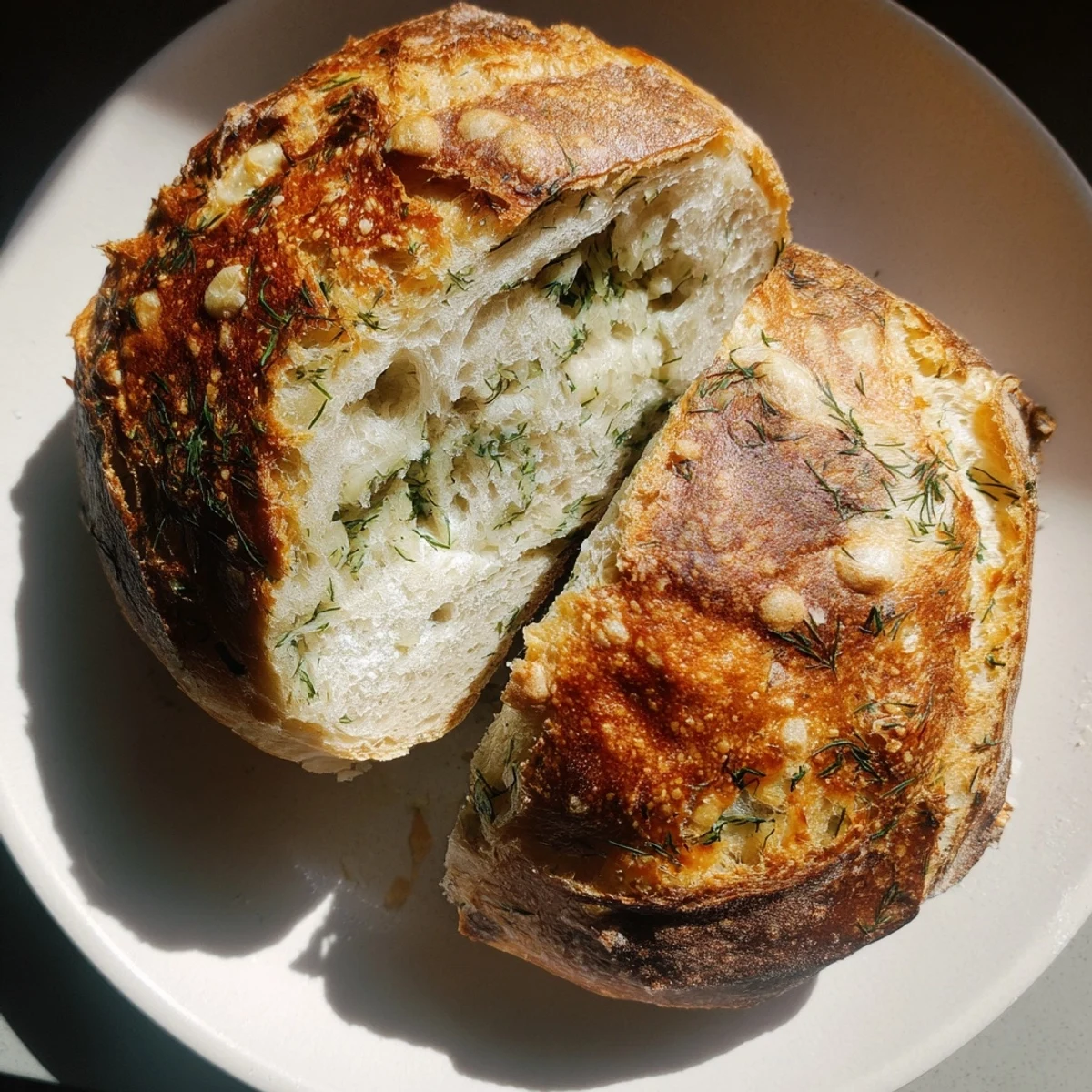
I love starting this dough the night before, letting it work while I sleep, and baking fresh bread in the morning. The whole house fills with that incredible dill aroma, and there is nothing quite like warm artisan bread with breakfast. If you are baking for dinner, mix the dough first thing in the morning so it is ready to shape by late afternoon.
Storing and Serving
This bread is best enjoyed the same day it is baked, when the crust is at its crispiest and the cheese is still slightly warm. Store any leftovers in a paper bag, never plastic, which will make the crust soggy and sad. For longer storage, slice the bread and freeze it, then toast individual slices to bring back that fresh baked texture.
- Wrap cooled slices individually in foil before freezing for easy grab and bake moments
- Revive day old crust by sprinkling with water and reheating at 350°F for 10 minutes
- This bread makes the most incredible grilled cheese sandwich you will ever have
 Save to Pinterest
 There is something profoundly grounding about making bread, even when it is this effortless. I hope this recipe finds its way into your regular rotation and brings warmth to your table too.
Recipe FAQs
- → How does the no-knead method affect the bread?
-
The no-knead approach allows a long resting time, helping gluten develop naturally for a tender crumb and a rustic crust without manual kneading.
- → Can I substitute the Gouda cheese?
-
Yes, mild cheeses like Emmental or Cheddar work well, altering the flavor while maintaining a creamy texture inside the loaf.
- → What is the role of dill in this bread?
-
Fresh dill adds an aromatic, herbaceous note that complements the cheese and enhances the rustic character of the bread.
- → Why use a Dutch oven for baking?
-
Baking in a preheated Dutch oven traps steam for a crisp crust and even heat distribution, mimicking traditional artisan baking conditions.
- → How should the bread be stored to maintain freshness?
-
Store the cooled loaf in a paper bag at room temperature for up to two days or freeze to extend shelf life without losing texture.