
 Save to Pinterest
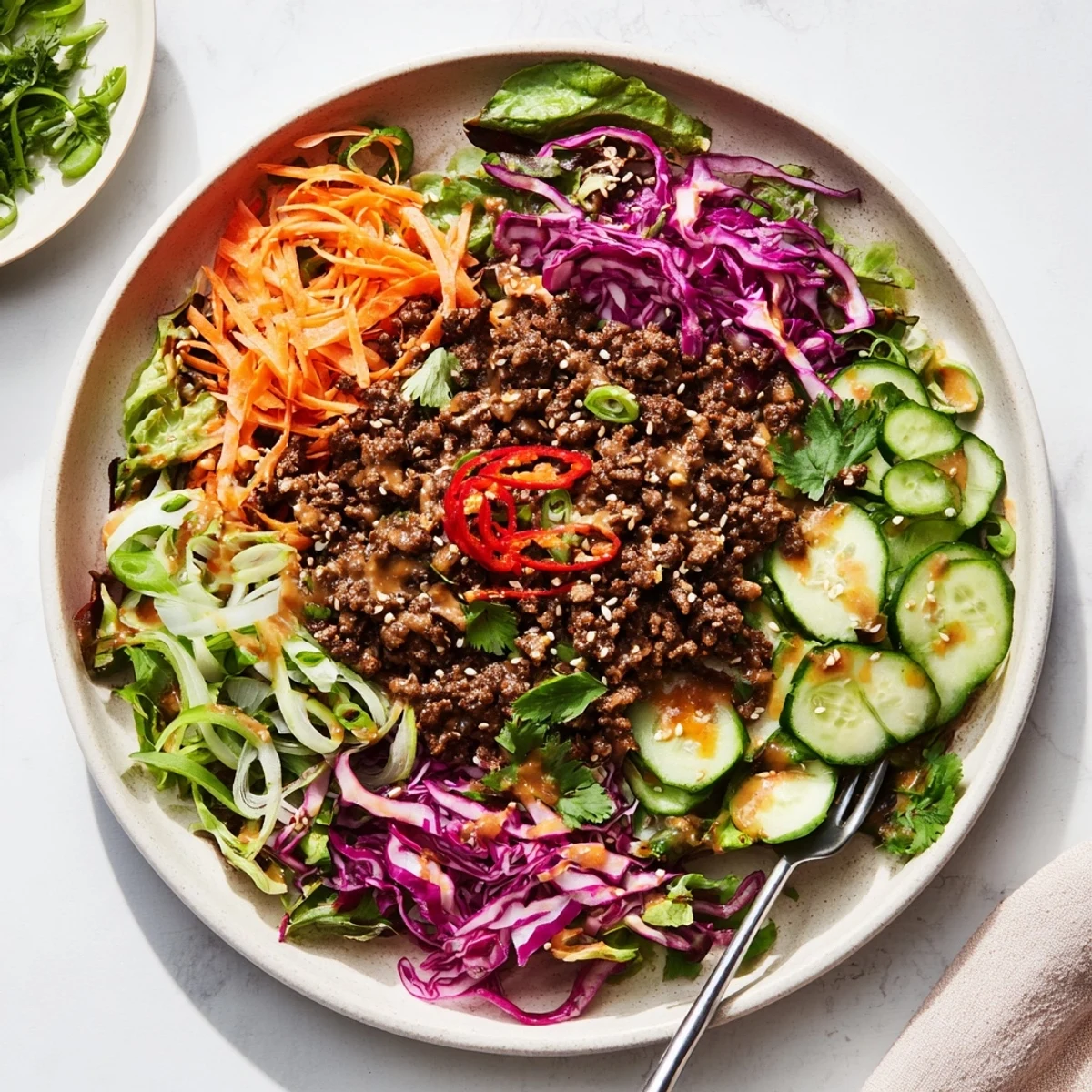
 This vibrant Korean-inspired bowl brings together savory spicy ground beef with fresh crisp vegetables. The beef gets its signature flavor from gochujang, ginger, garlic, and tamari, creating that perfect balance of heat and umami. Served over a bed of mixed greens, cabbage, cucumber, and aromatic herbs, each bite offers crunch and freshness. A drizzle of creamy sesame dressing ties everything together with its nutty tangy notes. Ready in just 30 minutes, this low-carb bowl satisfies cravings while keeping keto goals on track.
The first time I made Korean ground beef at home, my tiny apartment smelled like a sizzling street food stall in Seoul. I'd been craving those bold, spicy flavors but wanted something lighter than the heavy rice bowls I remembered from college nights out. This salad became my weeknight solution—same punchy taste, but I could eat the whole bowl without feeling weighed down.
Last summer, my friend Sarah came over for dinner and announced she was trying keto. I almost panicked until I realized this beef salad was already perfect—no modifications needed. She took three servings and asked for the recipe before she even finished her first plate.
Ingredients
- 1 lb ground beef 80/20 preferred: The fat ratio keeps the beef juicy and prevents it from drying out when it absorbs all those bold Korean spices
- 2 tbsp avocado oil: Has a high smoke point perfect for searing beef at high heat without burning
- 3 cloves garlic minced: Fresh garlic makes a huge difference here—preminced jarred garlic lacks the punch needed for the spice base
- 1-inch piece fresh ginger grated: Grating releases more flavor than chopping and distributes it evenly through the beef
- 2 tbsp tamari: Gives that essential umami depth without the gluten of regular soy sauce
- 1 tbsp gochujang: This Korean chili paste brings the signature heat and slight sweetness—look for sugar free brands to keep it keto
- 1 tbsp rice vinegar: Cuts through the rich beef and adds brightness that balances the heat
- 1 tbsp toasted sesame oil: A little goes a long way—this is the aromatic backbone of Korean cooking
- 1 tbsp erythritol: Just enough to mellow the heat and mimic the subtle sweetness in traditional Korean marinades
- 6 cups mixed salad greens: A sturdy mix like romaine or spinach holds up better than delicate spring greens under hot beef
- 1 cup shredded red cabbage: Adds crunch and a pop of color that makes the bowl feel vibrant
- 1 cup cucumber thinly sliced: Cool and refreshing against the spicy beef—dont skip this contrast
Instructions
- Sear the beef until deeply browned:
- Heat that avocado oil in your largest skillet over medium high heat until it shimmers. Add the ground beef and let it develop a dark brown crust before breaking it up—those crispy bits are where the flavor lives.
- Build the aromatic base:
- Toss in the garlic and ginger once the beef has browned. Stir constantly for just one minute until the kitchen fills with that mouthwatering fragrance—any longer and the garlic might turn bitter.
- Create the spicy glaze:
- Pour in the tamari, gochujang, rice vinegar, sesame oil, erythritol, and red pepper flakes. Cook for 2 to 3 minutes while stirring until the sauce thickens into a glossy coating that clings to every crumble of beef.
- Whisk the sesame dressing:
- In a small bowl, combine the sesame oil, rice vinegar, tamari, keto sweetener, lime juice, garlic, and salt. Whisk until completely smooth—this will drizzle over everything at the end.
- Build the salad bowls:
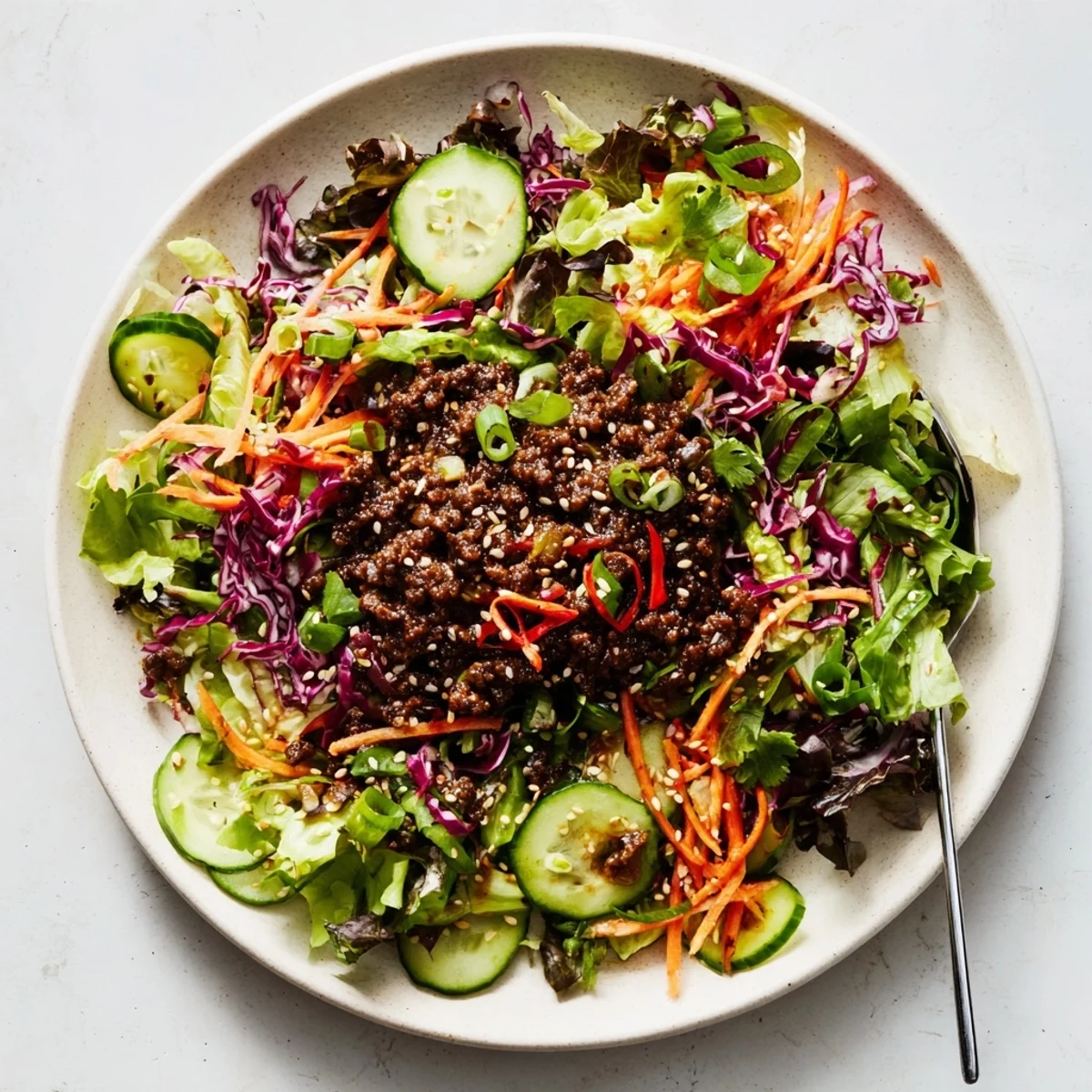
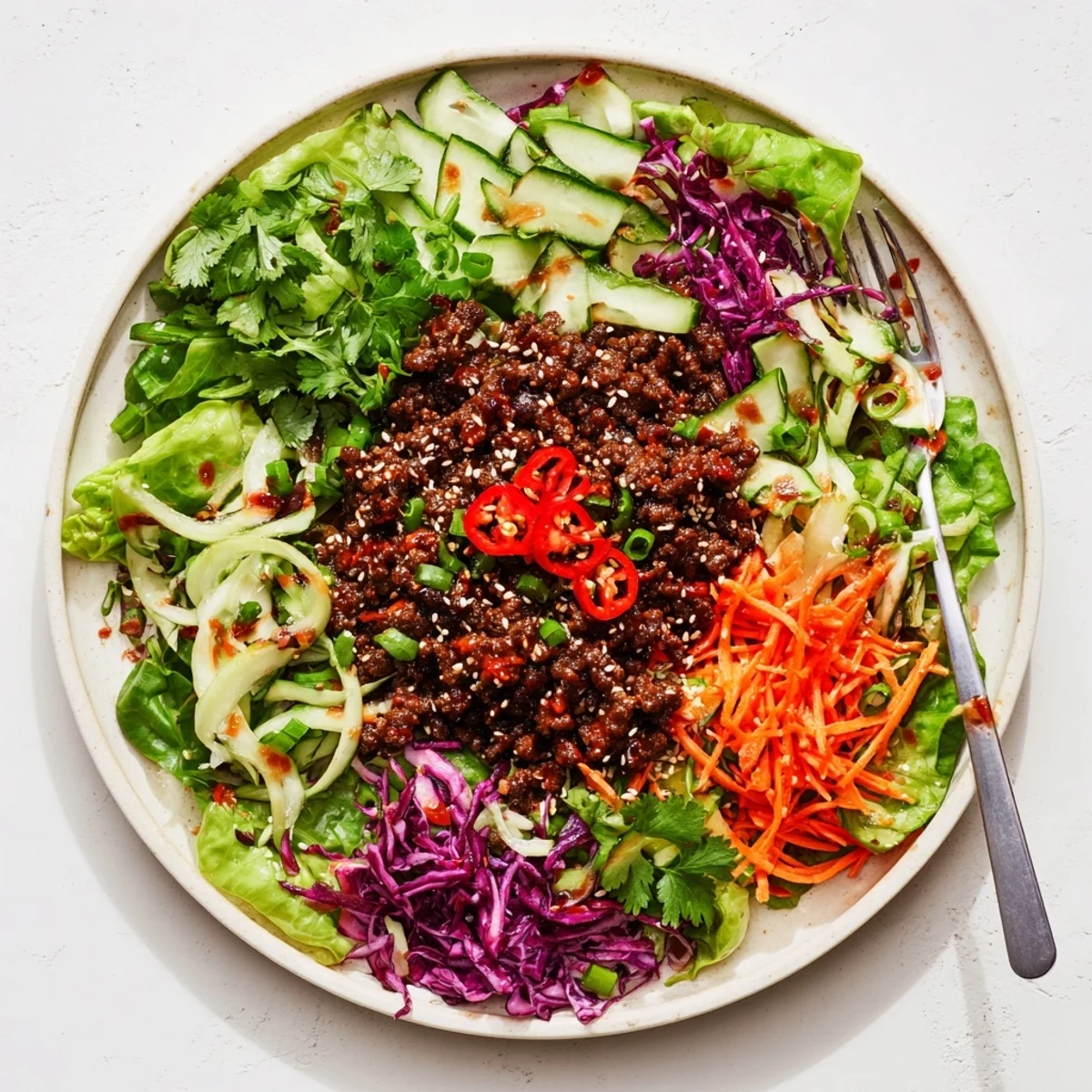
- Divide the greens, cabbage, cucumber, carrots, green onions, and cilantro among four bowls. Think of it as creating a colorful bed for the star of the show.
- Assemble and serve immediately:
- Scoop that hot spicy beef right over the crisp vegetables and drizzle with the sesame dressing. Top with toasted sesame seeds and sliced chilies while the beef is still steaming.
 Save to Pinterest
 My husband used to turn his nose up at salad for dinner until I made this. Now he requests it weekly and says the combination of hot beef and cold crunchy greens is somehow better than the rice bowl version.
The Art of Meal Prep
Ive learned to chop all the vegetables and whisk the dressing on Sunday while the beef cooks fresh each night. The contrast of hot seasoned meat against cold crisp salad is worth the extra 15 minutes of cooking time.
Making It Your Own
Ground turkey works beautifully here if you want something lighter, though I find beef carries the bold spices better. For extra crunch, sometimes I add radishes or jicama—anything sturdy enough to stand up to the heat.
Perfect Wine Pairings
A crisp dry white wine cuts through the rich beef and complements the spicy notes without competing. I also love sparkling water with plenty of lime for a non alcoholic option that feels special.
- Pinot Grigio with its bright acidity balances the heat beautifully
- Sauvignon Blanc brings grassy notes that echo the fresh herbs
- Extra lime wedges on the side let everyone adjust their own brightness
 Save to Pinterest
 This salad has become my answer to busy weeknight dinners that still feel special. Hope it brings as much joy to your table as it has to mine.
Recipe FAQs
- → Can I use ground turkey or chicken instead of beef?
-
Yes, ground turkey or chicken work beautifully as lighter alternatives. They'll absorb the Korean spices just as well, though beef adds extra richness from its fat content.
- → Is gochujang keto-friendly?
-
Traditional gochujang contains sugar, so look for sugar-free versions. Alternatively, substitute with sriracha plus tomato paste for a keto-friendly option with similar heat and depth.
- → What vegetables work best for strict keto?
-
Focus on leafy greens, cucumber, cabbage, and herbs. Omit carrots or replace them with extra cucumber, radishes, or bell peppers for lower carb counts while maintaining crunch.
- → Can I make the beef ahead of time?
-
The Korean beef stores well for 3-4 days in the refrigerator. Reheat gently before serving over fresh greens. Keep dressing separate until ready to serve for best texture.
- → What makes this dish Korean fusion?
-
The combination of gochujang, sesame oil, ginger, and garlic creates authentic Korean flavors, while serving it as a salad bowl over fresh greens adds a modern low-carb twist.
- → How spicy is this dish?
-
The spice level is medium from gochujang and red pepper flakes. Adjust heat by reducing or increasing these ingredients, or omitting the optional red pepper flakes for milder flavor.